
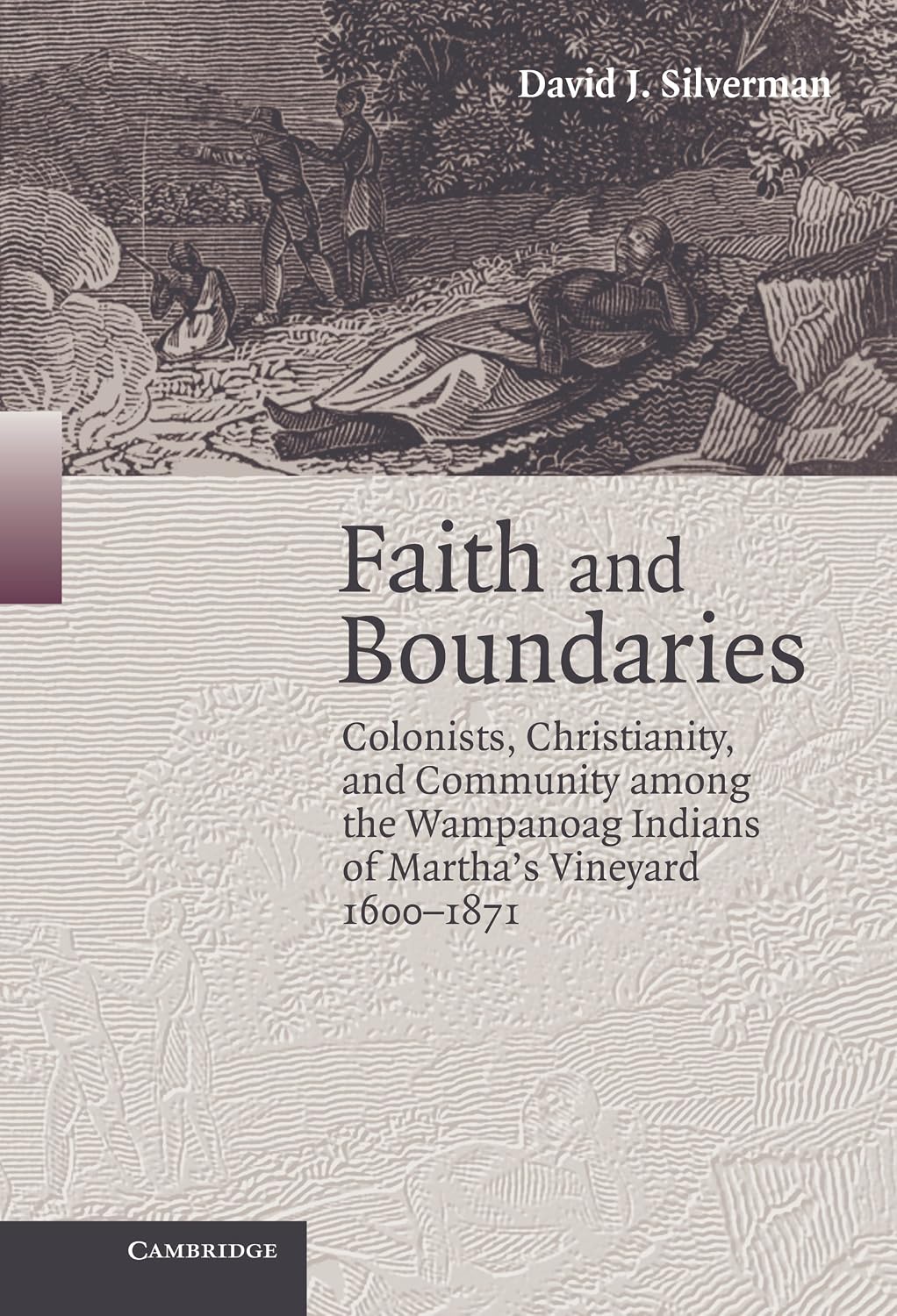
Faith and Boundaries: Colonists, Christianity, and Community among the Wampanoag Indians of Martha's Vineyard, 1600–1871 (Studies in North American Indian History)
Product details
| Management number | 232099629 | Release Date | 2026/06/18 | List Price | US$12.07 | Model Number | 232099629 | ||
|---|---|---|---|---|---|---|---|---|---|
| Category | |||||||||
It was indeed possible for Indians and Europeans to live peacefully in early America and for Indians to survive as distinct communities. Faith and Boundaries uses the story of Martha's Vineyard Wampanoags to examine how. On an island marked by centralized English authority, missionary commitment, and an Indian majority, the Wampanoags' adaptation to English culture, especially Christianity, checked violence while safeguarding their land, community, and ironically, even customs. Yet the colonists' exploitation of Indian land and labor exposed the limits of Christian fellowship and thus hardened racial division. The Wampanoags learned about race through this rising bar of civilization - every time they met demands to reform, colonists moved the bar higher until it rested on biological difference. Under the right circumstances, like those on Martha's Vineyard, religion could bridge wide difference between the peoples of early America, but its transcendent power was limited by the divisiveness of race. Read more
| ASIN | B01DM26SGC |
|---|---|
| XRay | Not Enabled |
| Format | Print Replica |
| ISBN13 | 978-1316699645 |
| Edition | Illustrated |
| Language | English |
| File size | 7.4 MB |
| Page Flip | Not Enabled |
| Publisher | Cambridge University Press |
| Word Wise | Not Enabled |
| Print length | 328 pages |
| Accessibility | Learn more |
| Part of series | Studies in North American Indian History |
| Publication date | April 4, 2005 |
| Enhanced typesetting | Not Enabled |
Bestseller ranking
Cocktail Picks


Customers who viewed this product also viewed
New England



Correction of product information
If you notice any omissions or errors in the product information on this page, please use the correction request form below.
Correction Request Form